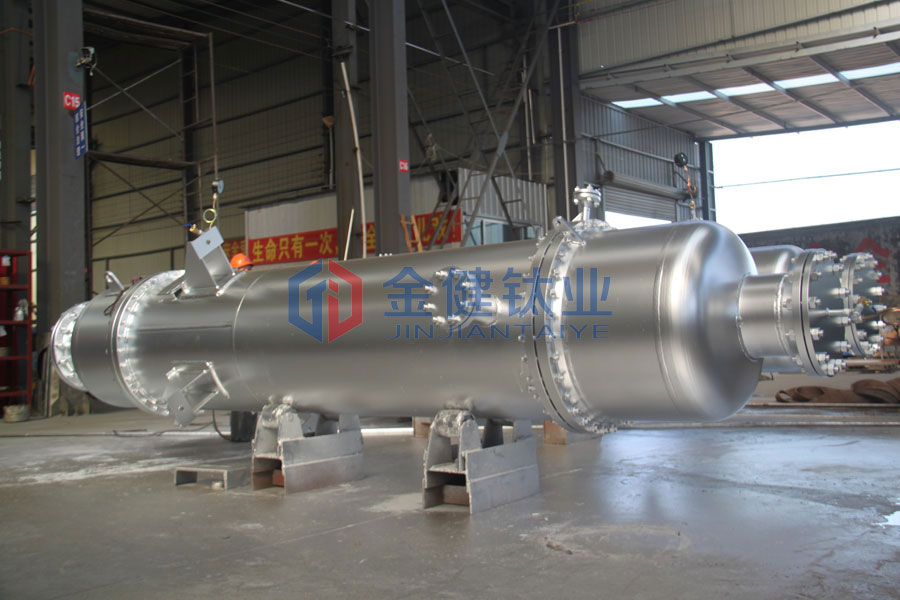
Heat Exchanger
Expansion surface of heat exchange tube: circumferential fins, longitudinal fins, plate fins
Rotating Flow Lift: Spiral Rib Rotating Link Twisted Tube shaped New Flow Device
Surface treatment: hydrophobic coating, anti-corrosion coating, porous coating, sintering
Rough surface: corrugated joints, internal waves, external threads,
transverse grooves, straight grooves, corrugated joints,
three-dimensional ribs
Single phase heat transfer enhancement can
be divided into internal flow and external flow, and can also be further
divided into laminar flow enhancement and turbulent flow enhancement.
The main mechanism for enhancing laminar and turbulent flow is to
increase the secondary heat transfer surface and disrupt the previously
unreinforced fluid velocity and temperature distribution fields.
Laminar flow enhancement: The heat transfer film coefficient of laminar
flow is relatively low, and the changes in fluid velocity and
temperature are distributed throughout the entire channel width. The
thermal resistance is not concentrated near the wall like turbulence,
and the enhancement effect of small-scale rough surfaces in laminar flow
is not significant; The usual reinforcement measures involve generating
vortices or creating turbulence.
Turbulence enhancement: During
turbulence inside the pipe, most of the thermal resistance is
concentrated in the low-speed zone near the wall where the fluid
velocity is approximately zero, that is, the laminar bottom layer. Any
rough surface or strengthening technique is used to disrupt laminar flow
in order to improve heat transfer. The inner flow layer thickness of
the d=25.4mm tube with Re=3000 is 0.0762mm.
Phase change heat
transfer enhancement: Condensation enhancement utilizes surface tension
to obtain a very thin condensation film thickness or quickly drain
condensate from the condensation surface. Droplet condensation has high
heat transfer efficiency and high heat flux density. Strengthening heat
transfer to reduce the thickness of the liquid film, in order to improve
heat transfer efficiency.
Special surface treatment involves
coating the surface with a layer of low surface energy material,
resulting in droplet like or droplet film coexistence condensation
The special surface geometry allows for faster drainage of condensate.